
REGENT marks opening of world's first Seaglider Manufacturing Facility
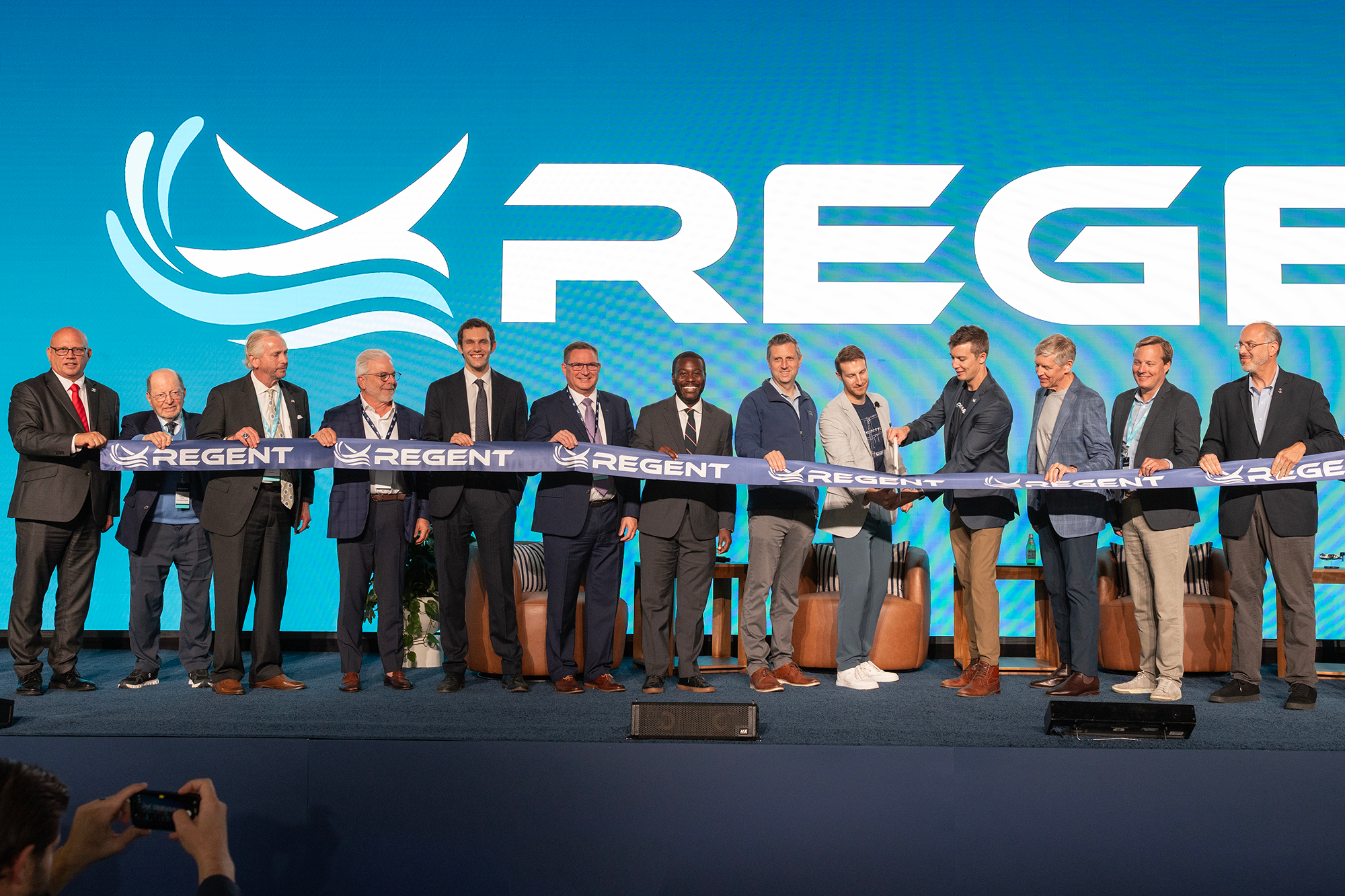
REGENT marks a major step toward full-scale Seaglider deliveries around the world through the opening of its manufacturing facility, less than a month after the first ground effect flight of its Viceroy Seaglider prototype.
Read Now
Shephard Media: Iran and the future of amphibious operations





The below article was originally published on shephardmedia.com.
Amphibious operations are a very unique type of military operation, and global defence industries are developing new solutions to enhance capabilities and efficiency.
Thousands of US Marines from the 11th and 31st Expeditionary Units are currently en route to the Middle East aboard US warships, in addition to the 82nd Airborne Division. It is believed there is a strong possibility that the US government could carry out a ground operation in Iran, including Kharg Island, to reopen the Strait of Hormuz.
This hypothetical operation would include an amphibious component. While landing craft will continue to be used for beach landings, there are emerging technologies, both crewed and uncrewed, to support troops.
In January, Adm Daryl Caudle, the US Navy’s (USN) chief of naval operations, disclosed the service’s new hedge strategy, which will involve a mix of uncrewed systems at sea to support crewed ships and submarines. During a recent 10-day tour to Australia and Singapore, Caudle said “autonomous systems are rapidly changing the character of naval warfare.”
Airbus is developing the MQ-72C Lakota Connector, which is essentially a drone helicopter. With a cruise speed of 135kt and a maximum operating altitude of around 6,000m, the Lakota Connector can transport joint intermodal modular containers and ordnance containers from ships to a beach to support expeditionary troops.
Carl Forsling, senior director, strategy and business development at Airbus US Space & Defense, told Shephard that the company is in a Middle Tier of Acquisition for Rapid Prototyping (MTA-RP) with Naval Air Systems Command. The company is already conducting autonomy and integration flight tests of the Lakota Connector, which will continue throughout 2026, with the MTA-RP set to conclude in 2029.
Airbus expects to demonstrate the Lakota Connector’s capabilities “in increasingly mission-representative environments with the US Marine Corps (USMC) as the programme continues”, Forsling explained. The company is confident it will deliver a system to the USMC “with time to spare.”
Regarding how the Lakota Connector can support beach landing missions, Airbus highlights that the platform can internally carry the most commonly used standardised shipping and munition containers and also has an external load capability. The “large cargo capacity”, Forsling noted, means that the Lakota Connector can be deployed “in quantity in amphibious and expeditionary operations, allowing high-speed delivery of essential cargo” without putting aircraft crews at risk.
From air to sea
There are also uncrewed maritime solutions for amphibious missions. US company Hydronalix produces a family of uncrewed surface vessels, including Reckless which is specifically designed for maritime cargo missions thanks to its autonomous waypoint navigation for up to 24km. Weighing 89kg and with a length of 203cm, Reckless is person-portable and can carry up to 226kg of cargo.
Hydronalix president Robert Smith told Shephard that the USMC “continues to operate and evaluate the military utility of Reckless”. Future demonstrations of Reckless are scheduled to take place in Hawaii, Camp Lejeune (North Carolina) and the Philippines.
Smith confirmed to Shephard that the company will unveil a new variant of Reckless at the upcoming Modern Day Marine expo in April in Washington, DC, which will address “some of the pressing requests we have received from fleet marines.”
Other companies are also developing automated platforms for beach landing missions. Navantia Australia displayed in late 2025 the model of a concept of its Uncrewed Landing Craft (ULC), which can operate “both [as] a standalone vessel and a next-generation replacement for current LHD Landing Craft.”
Similarly, startup company Bulwark Systems is developing Caravel, an autonomous beach-landing vessel for contested logistics. The company opened its prototype production facility in California in January 2026.
A step towards the US hybrid strategy
Innovative systems are also on the horizon, such as REGENT developing the Viceroy Seaglider and an autonomous version, Squire.
The company commenced its 2026 test campaign in early March, and Tom Huntley, general manager at REGENT Defense, told Shephard that the company has extended its collaboration with the USMC Warfighting Lab (MCWL). “We are into our second phase of work with the MCWL,” Huntley noted, adding that the company is demonstrating “the full-scale Seaglider prototype’s technical capabilities”.
REGENT highlighted that hydrofoiling testing will continue and a “first flight with humans on board” will also occur this year. Testing of Squire is also underway.
Regarding the USN’s new hybrid strategy, Huntley believes that both Viceroy and Squire can assist beach landing missions, including transporting troops or cargo from ship to shore “without relying on ports or runways, operating at high speed and low altitude to reduce detectability”.
Viceroy’s “innovative hull design” enables shallow water operations in contested littoral areas, the REGENT executive noted. It can travel up to 1,400nmi and can carry a payload of up to 1,600kg.
If an amphibious US operation in Iran does occur, there will be many lessons learned for military and industry alike about the future of this type of warfare.