
REGENT announces world’s first human-crewed Seaglider flight
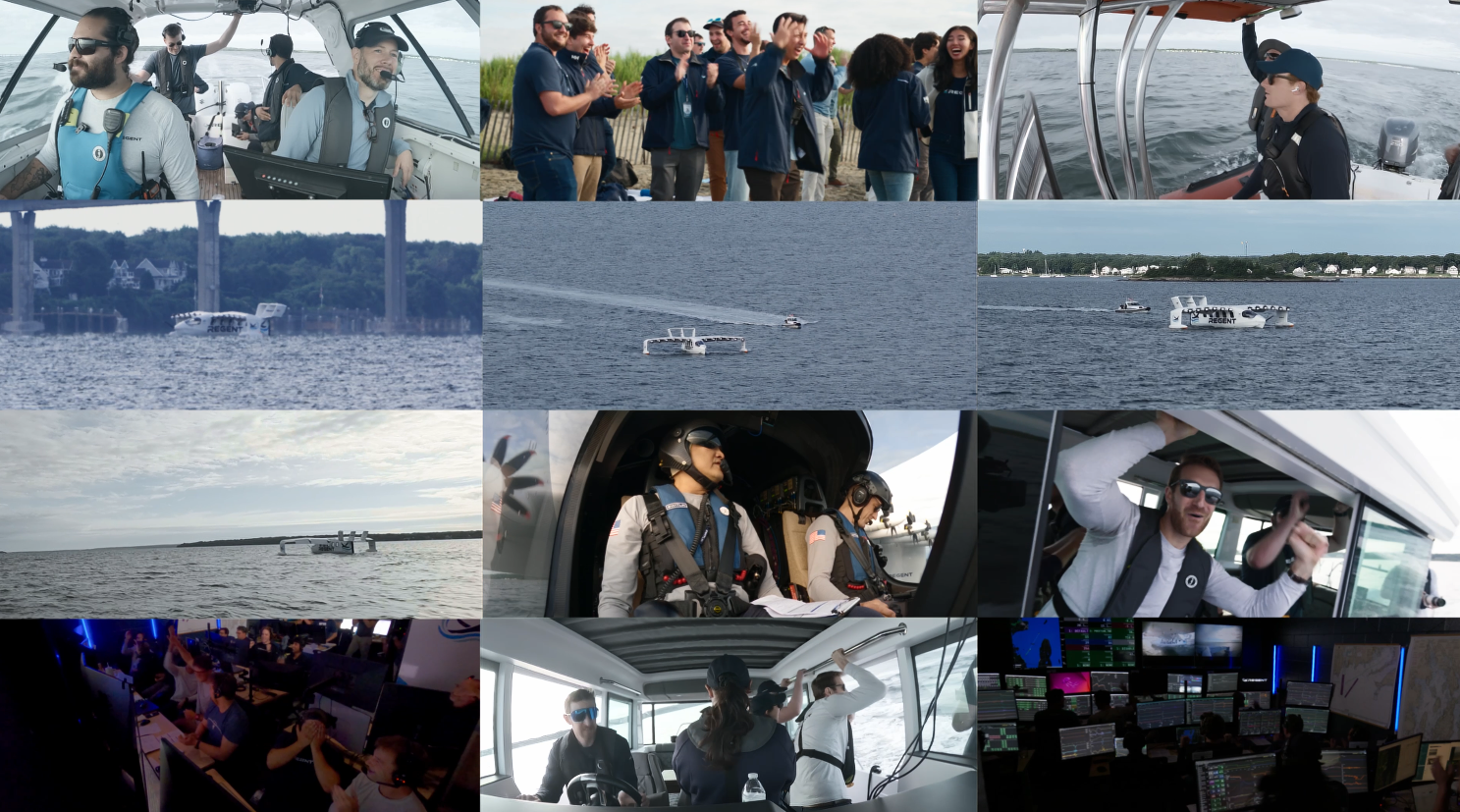
The future of maritime mobility took flight in Narragansett Bay, Rhode Island, on Sept. 2, 2026.
Watch Now
REGENT Defense caps a landmark year with breakthrough technology that will reshape maritime defense

Key milestones include achieving ground-effect flight of Squire Seaglider drone, completing live rescue demonstrations, briefing U.S. Secretary of War Pete Hegseth, and successfully demonstrating remote Seaglider charging capabilities.
North Kingstown, R.I., June 15, 2026 — REGENT, the developer and manufacturer of Seaglider™ vessels, today announced a landmark year for REGENT Defense, marked by five major milestones that are accelerating the integration of Seaglider technology into the U.S. and allied maritime defense missions.
Since REGENT announced the creation of REGENT Defense at the Reindustrialize conference last year, REGENT Defense has advanced from live mission demonstrations for the U.S. Marine Corps including rescue operations and logistics missions to the first-ever defense-specific wing-in-ground effect drone flight in the United States. The REGENT Defense team have briefed the highest levels of military leadership, proven remote charging in austere environments, and forged defense agreements with key allies across four continents, validating Seaglider vessels as the next decisive edge in maritime warfare.
"We launched REGENT Defense with a commitment to address an urgent national security need and deliver high-speed, wave-tolerant maritime mobility to the warfighter,” said Billy Thalheimer, co-founder and CEO of REGENT. “One year in, the Department of War and our allies have made clear that Seaglider technology addresses one of the most pressing capability gaps in the maritime domain, and we are firmly on track to deliver this as a program of record."
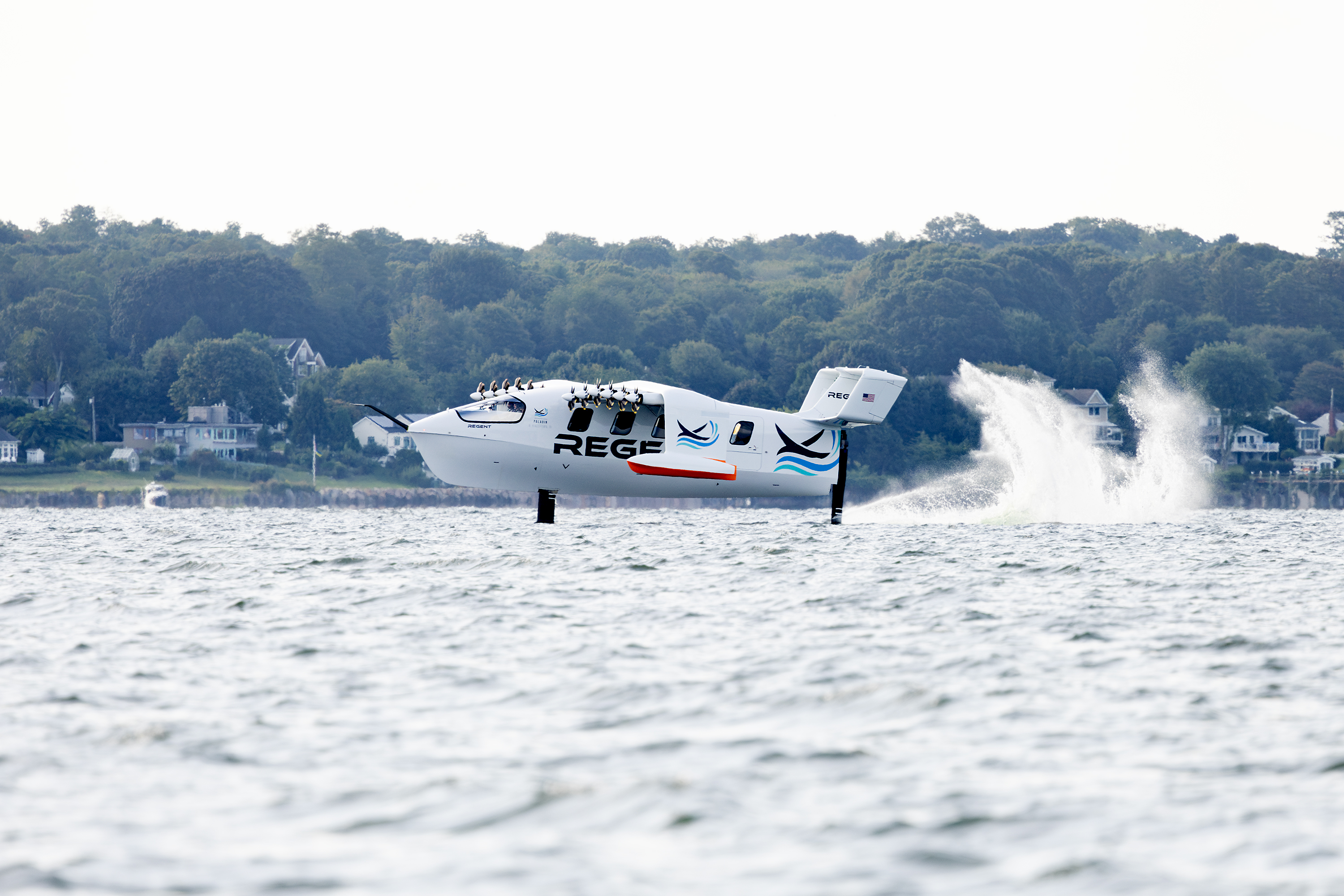
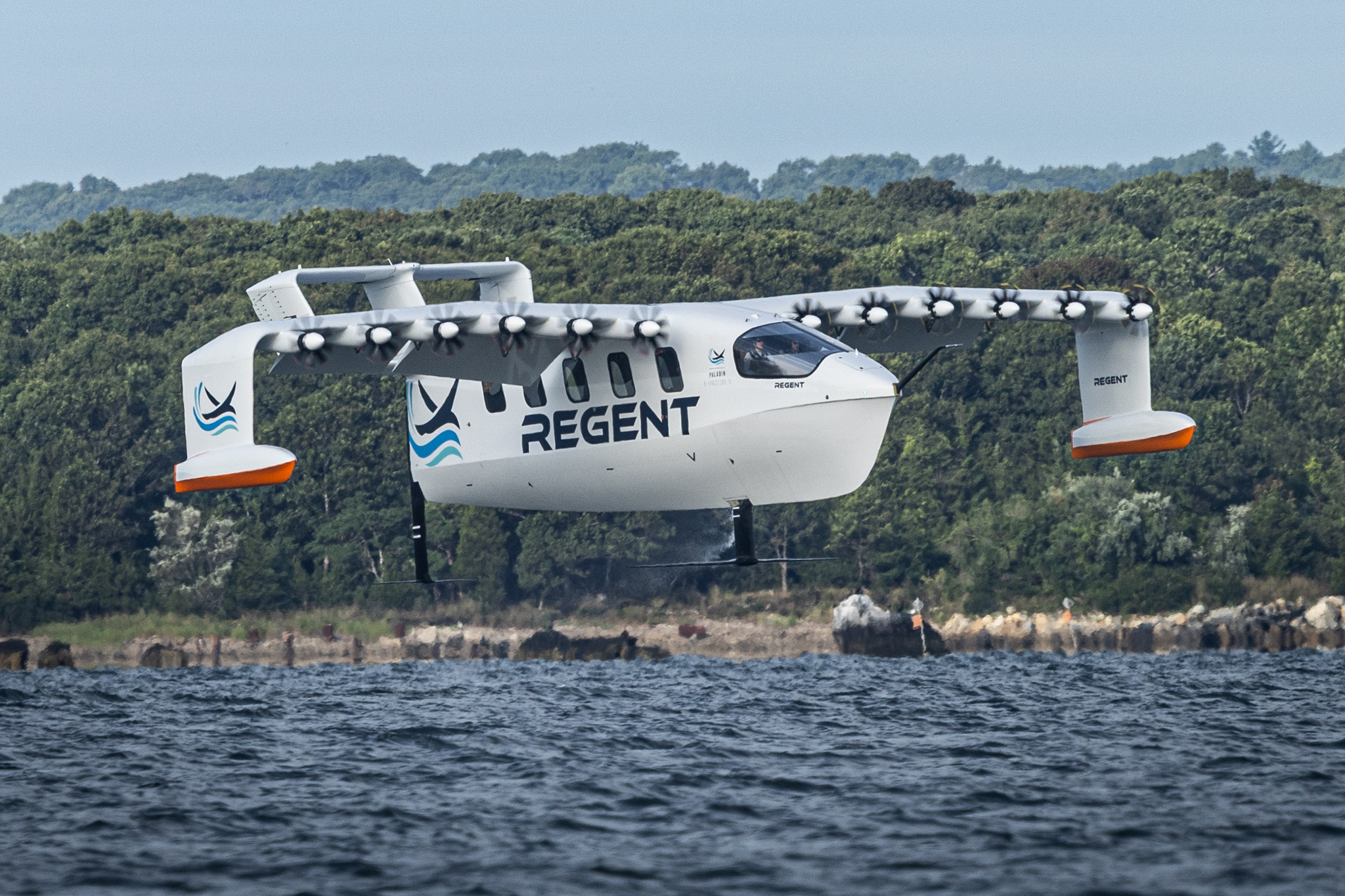
Seaglider vessels operate in ground effect just above the water's surface and below line-of-sight radar. That unique profile — high-speed, long-range, low-signal and operable from austere locations — positions Seaglider vessels to solve missions that today's ships, helicopters, and drones cannot.
REGENT holds a $15 million contract with the U.S. Marine Corps and is a trusted partner as the Corps advances its strategic shift toward distributed maritime operations. REGENT also has formalized development relationships with U.S. Special Operations Command (USSOCOM) and the U.S. Coast Guard Research and Development Center, advancing next-generation maritime mobility across the joint force.
Demonstrated Seaglider Rescue Capabilities
In November 2025, REGENT expanded its partnership with the Marine Corps Warfighting Lab (MCWL), completing three live rescue demonstrations: dockside litter boarding of a non-ambulatory patient, a beach extraction simulating the recovery of an injured warfighter from the shore, and an open-water life raft rescue in challenging sea conditions.
The demonstrations validated Seaglider vessels for Medical Evacuation (MEDEVAC) and Casualty Evacuation (CASEVAC) missions, showing that Seaglider vessels can move quickly to the scene, board survivors, and transport them to a higher level of care at speeds no boat or helicopter can match in contested environments. The exercise also confirmed the Viceroy Seaglider vessel's configurable interior can accommodate the medical equipment and personnel needed for front-line rescue missions.
Validated by Department of War
In February 2026, REGENT leadership briefed U.S. Secretary of War Pete Hegseth and his senior staff at the historic Seabee Museum in Quonset, Rhode Island. The team presented Squire, REGENT's autonomous Seaglider drone, and outlined how the broader Seaglider platforms can support contested logistics, MEDEVAC, and intelligence, surveillance, and reconnaissance (ISR) operations across challenging maritime environments.
Secretary Hegseth emphasized the urgent need to close operational gaps in maritime defense operations and called on emerging defense companies like REGENT to deliver mission-ready capabilities with speed. The meeting underscored Seaglider technology's relevance at the highest levels of U.S. defense strategy.
REGENT Defense also has ongoing engagements with defense departments across the world, showing a growing demand in littoral and island chain defense that no existing platform can match at comparable cost and speed.
Proved Squire Seaglider Drone Capabilities
In April 2026, REGENT announced the completion of a ground-effect flight of Squire, its autonomous Seaglider drone built expressly for defense missions, marking the first time a defense-specific wing-in-ground effect craft has flown in the U.S. The milestone positions the U.S. to establish leadership over China in this critical and rapidly emerging technology domain.
Squire is a Seaglider USA-V (Unmanned Surface and Aerial Vehicle) drone capable of speeds up to 70 knots, a planned operational range exceeding 100 nautical miles, and a 50-pound configurable payload. It is designed for ISR, tailored logistics, search and rescue, and anti-submarine warfare, missions that today require either slow watercraft or expensive manned aircraft. The reliable, repeatable test campaign proves Squire is on a clear path to mission-ready deployment.
Demonstrated Austere Charging Abilities
In May 2026, REGENT, Schneider Electric, and World4Solar successfully demonstrated remote Seaglider charging capabilities, proving that Seagliders can operate independently of established port infrastructure. The demonstration is a critical enabler for distributed maritime operations: defense forces can position charging capability at forward bases, remote coastlines, or island chains without requiring grid access or permanent port infrastructure.
Equally significant, the demonstration highlighted the Seaglider platform’s potential as a mobile energy asset. Hybrid equipped Seaglider vessels can bring electric power forward to support expeditionary basing, communications systems, and sensors in locations where reliable power is scarce.
Looking Ahead
REGENT Defense enters its second year with a full Seaglider test campaign underway, a 255,000-square-foot manufacturing facility coming online at its Quonset, Rhode Island headquarters, and an expanding portfolio that includes the defense-variant Viceroy Seaglider, hybrid configurations, and the Squire drone. Each platform is engineered to operate in contested environments and to deliver decisive speed, range, and mission flexibility to the warfighter at a cost that scales.
"There is a critical capability gap in the maritime domain, and the Department of War and our allies have made clear it cannot wait,” said Tom Huntley, General Manager of REGENT Defense. “In one year, REGENT Defense has demonstrated the technology, secured the partnerships, and stood up the industrial base to close that gap at speed and at scale."
For more information on REGENT Defense capabilities, visit defense.regentcraft.com.
About REGENT
REGENT is pioneering the future of maritime mobility through the development and manufacturing of Seaglider™ vessels, high-speed hydrofoiling wing-in-ground effect (WIG) craft that operate over the water within a wingspan of the surface, combining the speed of an aircraft with the convenience of a boat. A dual use company based in Rhode Island, U.S., REGENT has secured global commercial orders valued at more than $10 billion from leading airline and ferry operators around the world, as well as $15 million in contracts with the U.S. Marine Corps. REGENT has raised more than $100 million from investors including 8090 Industries, Founders Fund, Japan Airlines, and Lockheed Martin.
REGENT Craft Press Team: regent@boldspace.com